More and more families are looking for international educational alternatives that prepare their children for a globalized world. Among them, the American education system stands out for its practical approach, academic flexibility, and preparation for university access worldwide.
What the American education system is
The American education system is a teaching model centered on the holistic development of the student. Beyond the acquisition of knowledge, it fosters skills such as critical thinking, communication, creativity, problem-solving, and teamwork.
Unlike other more traditional systems, learning is not exclusively based on final exams. Students actively participate in class, develop projects, give presentations, and work continuously throughout the entire course.
The objective is to form students capable of applying their knowledge to real-world situations and prepare them for the academic and professional challenges of the future.
Structure of the American education system
The American education system is organized into different stages according to the student’s age:
Preschool
Designed for children aged 3 to 5 years old, this is the first stage of the American education system. During this phase, early development is encouraged through play, exploration, and initial socialization routines.
Lower School
This stage corresponds to Elementary Education and covers the first years of schooling. Students develop fundamental skills in reading, writing, mathematics, science, and social studies.
Middle School
Equivalent to the first years of Secondary Education. Students begin to acquire greater academic autonomy and develop organizational, research, and analysis skills.
High School
Comprises the final four years of secondary education, typically Grades 9 through 12. During this stage, students can personalize part of their course of study through elective subjects and advanced programs.
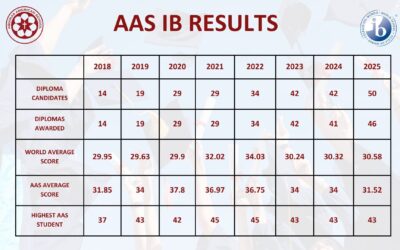
Upon completing High School, students earn the American High School Diploma, an internationally recognized qualification that allows them to access universities in the United States, Spain, and other countries. In addition, at AAS they can also choose to do the IB Diploma Program.
How academic performance is evaluated
One of the main differences compared to other educational models is continuous assessment.
Academic performance is based on multiple pieces of evidence of learning throughout the course:
- Exams and written tests
- Individual and group projects
- Oral presentations
- Class participation
- Research papers
- Periodic assignments and activities
This approach allows for a more comprehensive assessment of the student’s progress and reduces the weight of a single final exam.
Differences with the Spanish education system
Although both systems pursue the academic and personal growth of students, there are important differences in their methodology.
1. Continuous assessment versus exam-based evaluation
The American system places great importance on the work done throughout the entire course, whereas in the Spanish system, exams usually carry greater weight in the final grade.
2. Active student participation
Classes tend to be more dynamic and interactive. Students regularly participate in debates, presentations, and collaborative projects.
3. Greater academic flexibility
During High School, students can choose certain subjects based on their interests, strengths, and university goals.
4. Development of practical skills
In addition to academic knowledge, leadership, communication, teamwork, and the ability to solve problems autonomously are encouraged.
Advantages of the American education system
Development of critical thinking
Students learn to analyze information, formulate arguments, and develop well-founded personal opinions.
Practical learning
Knowledge is applied through projects, research, and activities that connect learning with real situations.
Focus on holistic development
Academic growth is complemented by the student’s personal, social, and emotional development.
Flexibility and personalization
Students have the opportunity to explore different areas of interest and build an academic itinerary better tailored to their goals.
International university preparation
The American system is specially oriented toward preparing students to access universities worldwide and thrive in international academic environments.
How does the American education system work in Spain?
In Spain, American and international schools adapt the US curriculum to the local context and the legal requirements established for access to higher education.
This allows students to benefit from an international methodology without giving up the possibility of continuing their studies in Spain.
Many American schools also complement the US curriculum with international academic programs that expand students’ university options, such as at Aquinas American School.
The educational model of Aquinas American School
Aquinas American School, located in Madrid, offers an education based on the American curriculum from Preschool to Grade 12.
Students follow an academic program that combines academic excellence with the development of personal skills, critical thinking, and an international vision of education.
During High School, students earn the American High School Diploma and also have the opportunity to pursue the International Baccalaureate Diploma Programme (IBDP), one of the most widely recognized pre-university qualifications in the world.
This combination allows students to access both Spanish universities and international institutions in Europe, the United States, and other academic destinations.
Its implementation in Spain allows families to access an international education that combines flexibility, university preparation, and a global vision of learning.